
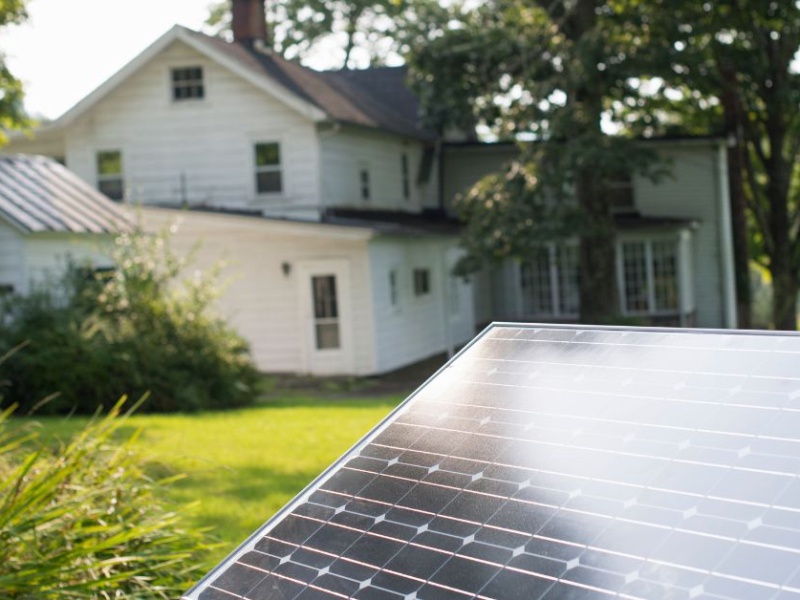
For more than a decade, the federal solar tax credit was the single biggest reason homeowners chose to go solar. With that credit now gone, you may wonder whether the numbers still add up. In short, absolutely. Here is what you need to know to decide for yourself.
What Changed: The 2025 Solar Tax Credit Expiration
The Residential Clean Energy Credit, which let you claim 30% of your installation cost against your federal taxes, ended on December 31, 2025. The One Big Beautiful Bill, signed into law in July 2025, moved the termination date up by nearly a decade. To qualify for the solar tax credit 2025 offered, your system had to be installed and placed in service before that deadline.
If you missed it, you are not entirely out of options. Solar leases and power purchase agreements still carry a federal benefit through 2027, because the leasing company claims the credit and passes the savings on to you through lower payments.
Solar Panel Costs and ROI Without the Tax Credit
Losing the tax credit raises your upfront cost, but it does not erase your return. Solar panels can still lower or eliminate your monthly electric bill. That savings compounds as utility rates climb year after year. You are essentially locking in your energy price while your neighbors keep paying more.
Solar panels also add measurable value to your home and protect you from outages, especially when paired with battery backup. Those benefits remain fully intact whether or not a tax credit exists.
Solar Panel Payback Period in 2026
Without the 30% credit, your payback period stretches out, but it does not disappear. Most systems still pay for themselves through the energy they produce. A quality installation will keep generating power for 25 years or more. The faster electricity prices rise in your area, the faster your panels pay you back.
State Incentives That Can Replace the Federal Credit
The Four States region of Arkansas, Kansas, Missouri, and Oklahoma offers no state income tax credit for solar. The strongest remaining incentives come from net metering and a handful of local programs.
Missouri requires all utilities to offer net metering under the Net Metering and Easy Connection Act, crediting you at the full retail rate for excess power your panels send to the grid. Arkansas net metering credits you for surplus energy as well, with grandfathered legacy customers locked into more favorable rates. Scattered property and sales tax exemptions and utility-specific rebates, such as those tied to Evergy, can further offset your cost. A local installer can tell you exactly which programs apply to your address.
Are Solar Panels Still Worth It in 2026?
Solar is worth it when your savings outpace your investment over time. For most homeowners in the Four States region, that math still works. The tax credit made a good deal even better, but it was never the only reason to go solar. Rising utility costs, energy independence, and added home value continue to make a strong case.
At Ipock Electric & Solar, we help homeowners and businesses across Joplin, Carl Junction, Carthage, Neosho, and the wider Four-State region weigh their options with honest, local expertise. Schedule your free estimate today and find out what solar can do for your home in 2026.